Best Shelling on Marco Island: Beaches Ranked by What You Can Reach
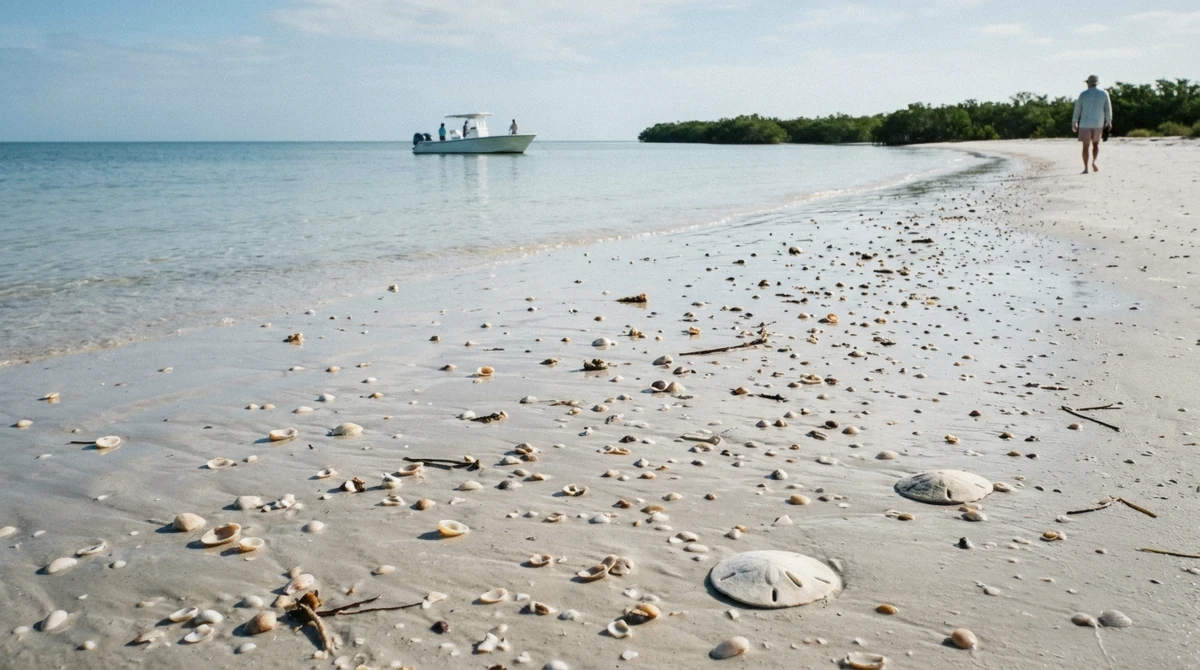
The best shelling on Marco Island splits cleanly into one walk-in option and a run of boat-only barrier islands further south, and which beach actually suits you comes down to how far you're willing to travel and what you're hoping to find. Tigertail Beach and its Sand Dollar sandbar are the only spots you can reach on foot; Kice Island, Dickman's Point, Keewaydin Island and Cape Romano all sit past the mangroves, reachable only by boat. This guide ranks them by access, tells you what each one actually produces, and covers the Florida rules that govern what you can take home.
Quick answer
Tigertail Beach and its Sand Dollar Island sandbar are the only walk-in shelling spot near Marco Island; everything else worth reaching, Kice Island, Dickman's Point, Keewaydin Island and Cape Romano, is boat access only. A falling or low tide, ideally the day or two after a winter cold front, beats any particular calendar month for what actually turns up on the sand.
Key takeaways
- Only walk-in option: Tigertail Beach and the Sand Dollar sandbar, reached by wading the lagoon
- Best boat-only grounds: Kice Island and Dickman's Point, a standard stop on the 10,000 Islands shelling tour
- Furthest and least crowded: Cape Romano, reachable on the longer 3.5-hour shelling and dolphin trip
- Tide matters more than the month: a falling or low tide after a cold front outproduces any fixed season
- Take empty shells only; a shell with the animal still inside, including sand dollars and sea stars, needs a Florida saltwater fishing licence
- For the wildlife you'll pass on the way out, see what actually lives in this water
The Trips That Reach the Boat-Only Beaches
Kice Island, Dickman's Point and the further shelling grounds are not walkable from Marco Island; these are the trips that get you there.
 from $100
Best Value · $100
from $100
Best Value · $100 10,000 Islands Shelling Boat Tour
Speed out from Marco Island to remote, uninhabited barrier-island beaches in the Ten Thousand Islands, where you can collect beautiful shells and sand dollars along an untouched shore.
- Landing on remote, uninhabited barrier-island beaches
- Prime shelling for whelks, conchs and sand dollars
- Fast speedboat ride through the Ten Thousand Islands
- Great-value 2-hour trip from Marco Island
 from $160
3.5 Hours · 4.8★
from $160
3.5 Hours · 4.8★ Ten Thousand Islands Shelling & Dolphin Cruise
Explore the Ten Thousand Islands National Wildlife Refuge by boat, watch dolphins in the wild, and spend time shelling for sand dollars on an uninhabited island beach.
- Longest trip: 3.5 hours in the wildlife refuge
- Dolphins in the Ten Thousand Islands National Wildlife Refuge
- Extended shelling stop on an uninhabited island
- Small-group, unhurried pace
 from $135
Top Rated · 4.9★ (97)
from $135
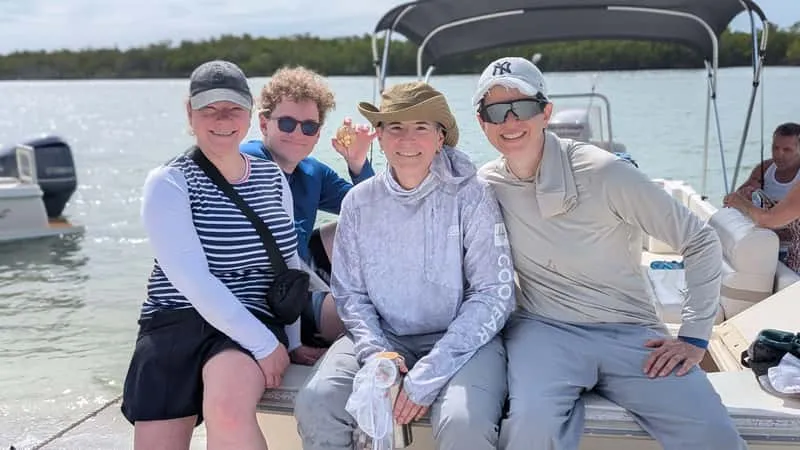
Top Rated · 4.9★ (97) Dolphin, Shelling & Beach Cruise: Ten Thousand Islands
Cruise Florida's Gulf coast from Marco Island, watch wild dolphins play alongside the boat, and stop at a secluded Ten Thousand Islands beach to hunt for shells and…
- Wild bottlenose dolphins alongside the boat
- Beach landing on a secluded Ten Thousand Islands key
- Shell and sand-dollar hunting on uninhabited sand
- 3 hours on the Gulf with a local captain
 from $475
Private · 4.9★ (106)
from $475
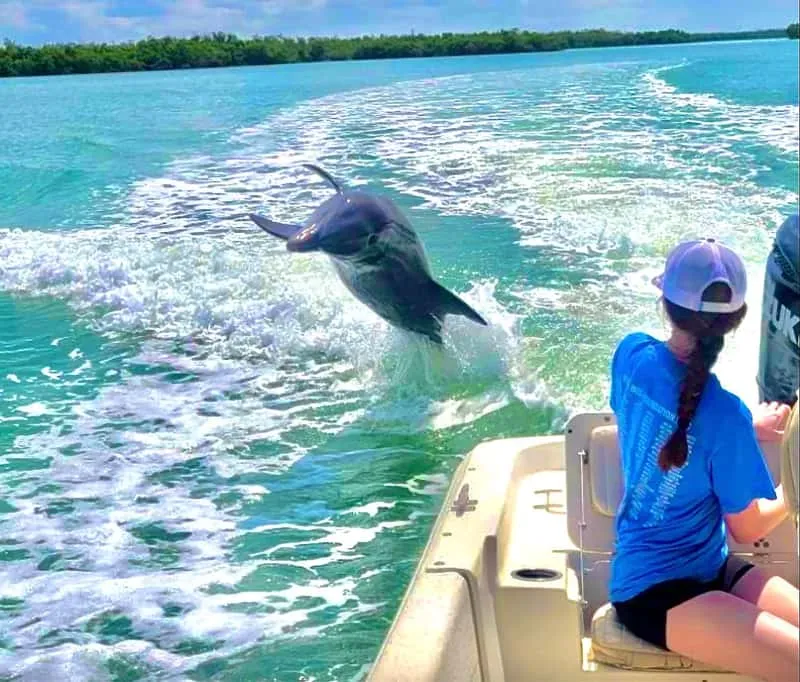
Private · 4.9★ (106) Private Shelling & Dolphin Excursion
Take a private boat from Goodland through the 10,000 Islands Wildlife Refuge to find wild dolphins close to the boat and come home with bags of beautiful, exotic…
- Private boat for your group only
- Close encounters with wild dolphins
- Bags of exotic shells to take home
- Top-rated: 4.9 stars from 100+ travelers
The Beaches, Ranked by What You Can Actually Reach
Access is the real dividing line on this list. One beach you can walk to on your own schedule; the rest require a boat and, in most cases, a guide who knows which sandbar is exposed on a given tide.
| Beach | Access | Known for | Effort |
|---|---|---|---|
| Tigertail Beach & Sand Dollar sandbar | Walk-in, wade the lagoon | Sand dollars, coquina, easy staging area | Low, but tide-dependent |
| Kice Island | Boat only | Large lightning whelks, lace murex | Moderate, uninhabited barrier island |
| Dickman's Point | Boat only, tip of Kice Island | Standard stop on shorter shelling trips | Moderate |
| Keewaydin Island | Boat or shuttle only | Roughly eight miles of undeveloped beach | Moderate to high, remote |
| Cape Romano | Boat only, furthest stop | Shoal-and-sandbar complex south of Kice | High, longest run from Goodland |
The trips below are the ones that actually reach the boat-only stops on this list, since none of these beaches show up on a self-drive itinerary.
| Trip | Duration | Price | What's included |
|---|---|---|---|
| 10,000 Islands 2-Hour Shelling Boat Tour | 2 hours | $100 per person | Florida Master Naturalist guide, US Coast Guard licensed captain |
| 10,000 Islands 3.5-Hour Shelling & Dolphin Tour | 3.5 hours | $160 per person | Naturalist guide, licensed captain, shell-collecting bags, the longest run of the shared trips |
| Dolphin, Shelling & Beach, Ten Thousand Islands | 3 to 4 hours | $135 per person | Captain and guide, bottled water, cooler with ice, shell buckets |
| Private Shelling & Dolphin Excursion | 2.5 hours | $475 whole boat, up to six | Private boat, guide, bottled water, cooler, shell bags, dry storage |
Which specific islands a trip stops at on a given day depends on the tide and the captain's read of it, which is exactly why a guided trip usually outproduces a solo attempt at the same water. Last verified: August 2026.
Tigertail Beach and the Sand Dollar Sandbar: the Only Walk-In Option
Tigertail Beach is a Collier County park, open 8:00 a.m. to sunset, and it is the one shelling spot on this list you can drive to and walk onto without a boat. Parking runs $10 per day for non-residents, the same rate charged at South Marco Beach Access, and is free with a Collier County resident beach parking permit.
The shelling itself sits offshore of the beach proper, on the Sand Dollar Island sandbar, and reaching it means wading a shallow lagoon between the park and the sandbar rather than simply walking the shoreline. Conditions shift with the tide, so what looks like a short wade at low tide can be a longer one as the water comes back in; keep an eye on the return crossing, not just the walk out.
Kice Island and Dickman's Point
Kice Island is an uninhabited barrier island immediately south of Marco, boat access only, and the name most guides mention first when asked where the good shelling actually is. Large lightning whelks and lace murex turn up here more consistently than on the walk-in beach, in part because far fewer people work this stretch of sand on a given week.
Dickman's Point sits at the northern tip of Kice Island, facing Caxambas Pass, and it is the standard stop on the shorter shelling trips because it is close enough to Goodland to reach without eating into the whole booking window. It is a reliable first stop rather than the most remote option on this list.
Keewaydin Island
Keewaydin Island runs roughly eight miles of undeveloped beach north of Marco Island, and it is part of the Rookery Bay National Estuarine Research Reserve, boat or shuttle access only. The length and the lack of development are exactly what makes it worth the longer run: more open sand per person than the closer stops, and shell beds that see less daily foot traffic.
Cape Romano
Cape Romano is the shoal-and-sandbar complex south of Kice Island, and it is the furthest of the usual stops any of these trips will make. Getting there is a longer run, which is exactly why it sees the least pressure of anywhere on this list. Not every trip reaches Cape Romano on a given day; ask before booking if it's specifically the stop you want.
Reading the Tide: Why It Matters More Than the Month
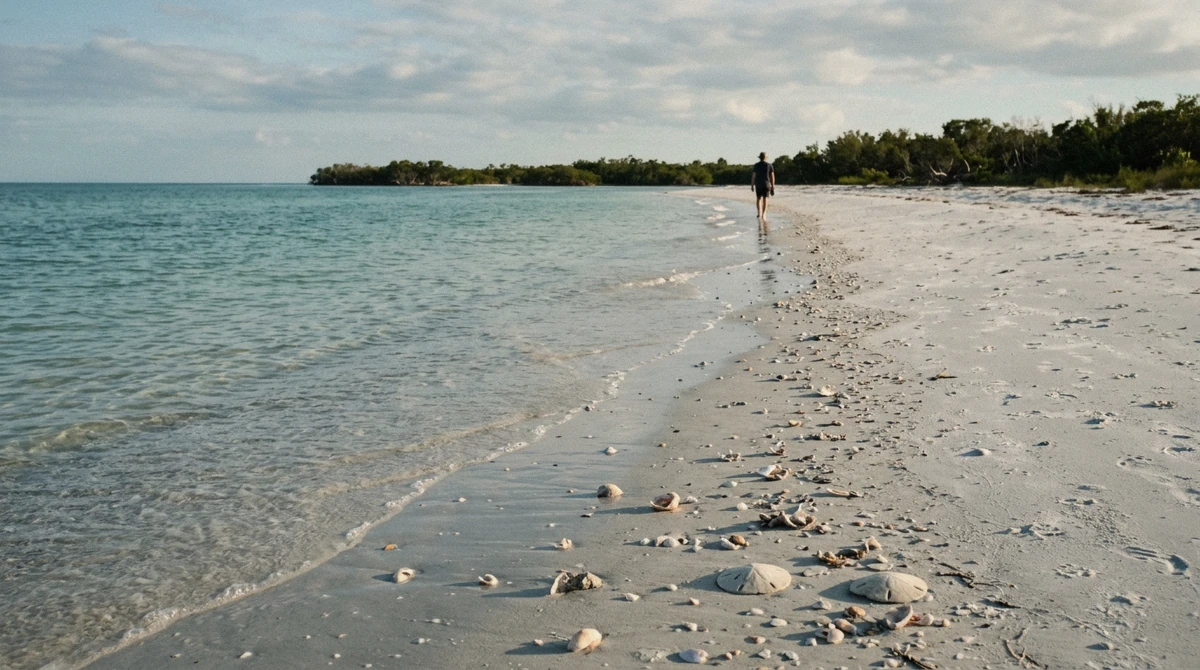
A falling or low tide is the single best condition for shelling on any of these beaches, because that's when the widest stretch of sand and shell hash is actually exposed rather than underwater. The day or two after a winter cold front pushes through is the other condition worth planning around: fronts stir up the shell beds offshore and shift fresh material onto the beaches in a way that an ordinary calm day does not. Tides, not months, decide whether a given morning is a good shelling day, which is why the guides on these trips watch a tide chart before they watch a calendar.
What You Will Find, and What You Will Not
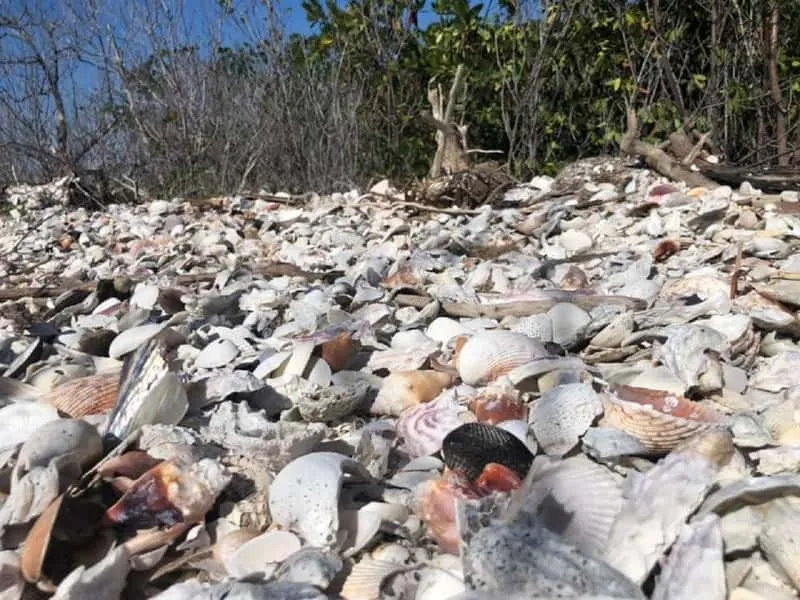
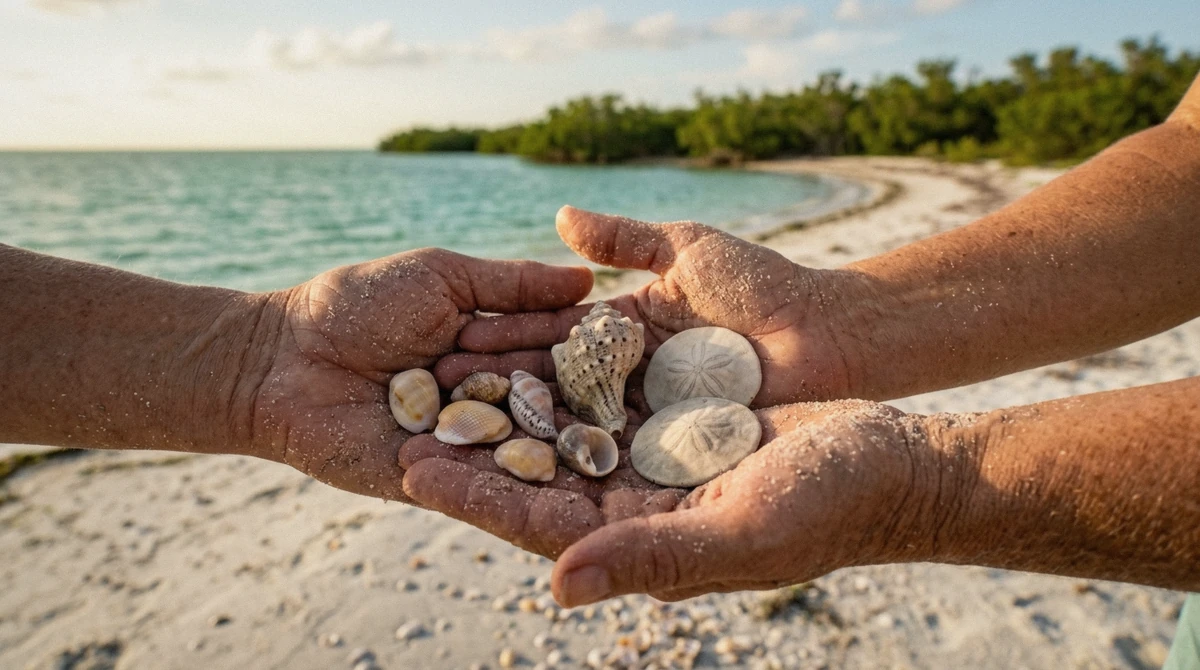
Shells commonly found across these beaches include the lightning whelk, Florida fighting conch, banded tulip, alphabet cone, lace murex, olive, coquina and sand dollar. Between them, that's a genuinely varied haul for a two-hour stop, and most guests come back with a full bucket without needing anything rarer than that list.
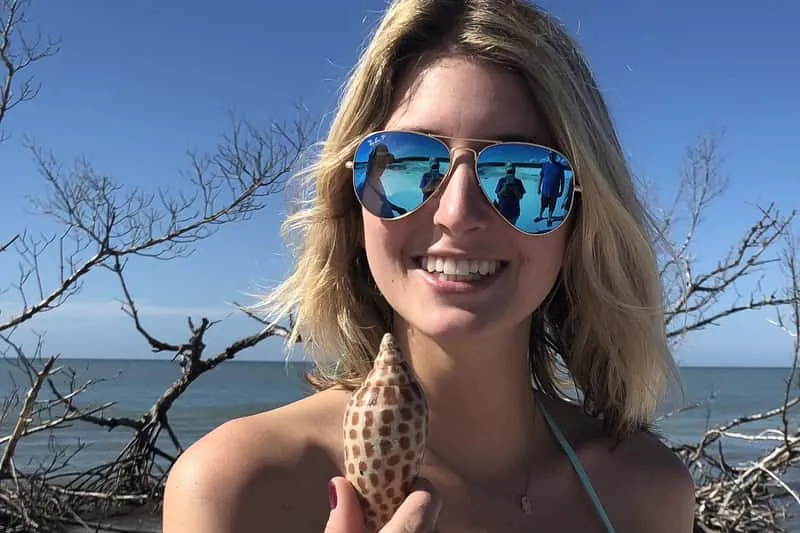
The junonia is the shell every local guide gets asked about, and it is the local prize precisely because it is genuinely rare. Finding one is a real possibility on these beaches, in the way that finding any rare thing is a real possibility, but no honest guide will suggest a visitor should expect one on a given trip. Treat the common list above as what you're actually shelling for, and the junonia as the bonus if the tide happens to hand you one.
Which Shelling Ground Suits You
If you have no boat and one free morning
walk out to the Sand Dollar sandbar from Tigertail Beach at low tide, $10 to park, gates open at 8:00 a.m.
If you want volume and do not mind an early start
take a boat trip to Kice Island or Dickman's Point, which is what the $100 two-hour run exists for
If you are travelling with children
pick a trip with a beach landing and a cooler on board, and keep the walk short
If you want the quietest sand and time to hunt properly
book the longer 3.5-hour run at $160, or a private boat at $475 for up to six
If you are here between March and August
expect posted nesting closures on parts of the sandbars and stay outside the stakes
The Rules: Empty Shells Only
Florida law, under the Fish and Wildlife Conservation Commission's recreational sea shell collecting rule, draws a clear line: a Florida recreational saltwater fishing licence is required to harvest any shell that still contains a living organism, even when you're collecting from shore rather than diving. Empty shells need no licence at all.
That live-shell rule covers more than molluscs. Echinoderms, meaning sand dollars and sea stars, count as live shellfish under the same rule, which surprises a lot of first-time shellers who assume a sand dollar is just a shell. All harvest of the Bahama starfish is prohibited outright, and possessing a live queen conch is prohibited at any time, licence or not.
State and federal parks, wildlife refuges and research reserves can forbid collection entirely regardless of the general state rule, and Rookery Bay's own reserve rules prohibit removing any natural resource from its waters, which covers Keewaydin Island directly. Some counties add their own stricter local rules on top of the state baseline, though none apply specifically to Marco Island beyond the general FWC rule above, and no local ordinance number is cited here because we could not verify one.
The simplest way to stay on the right side of all of this: take empty shells only. Guides on these trips ask you to put live sand dollars, sea stars and conchs back in the water, which is the easiest rule to follow rather than trying to work out a licence exception on the beach.
Telling a live sand dollar from a dead one is straightforward once you know what to look for. Living sand dollars are brown or purple-grey and velvety, with fine spines that move if you look closely. The white, smooth, brittle ones scattered along the tide line are dead tests, the bleached skeleton left behind, and those are the ones you can take.
One more rule that applies to the beaches themselves rather than the shells: Big Marco Pass Critical Wildlife Area, covering Sand Dollar Island and Tigertail, protects nesting least terns, black skimmers, snowy plovers and Wilson's plovers, with posted nesting closures typically running from 1 March to 31 August. Rookery Bay posts similar seasonal shorebird closures on Keewaydin Island and Second Chance Shoal across roughly the same window. Stay outside the posted stakes and rope during nesting season, on any of these beaches.
What to Carry for a Shelling Stop
None of this list requires special gear, just the right basics for wading, walking shell hash and carrying out what you find.
- Closed-toe water shoes: guides repeat this one item most, since landing on these islands means stepping onto shell hash and oyster rubble
- A mesh bag or bucket for what you collect; several of these trips provide one, but bringing your own means you're not sharing
- Sunscreen and a sun hat: there's little shade on any of these sandbars or barrier islands
- Bottled water, even on the trips that provide a cooler with ice, since most tickets don't include what fills it
- A light windbreaker for the ride back, since the boat's own speed is what makes the return trip cool, not the air temperature
- Insect repellent for the mangrove-lined stretches; biting midges, locally called no-see-ums, are a real nuisance in still evening air
None of these five beaches is the wrong choice; they answer different questions. Tigertail is the one you can reach without booking anything, Kice Island and Dickman's Point are the closest boat-only ground and the easiest to add to a shorter trip, and Keewaydin and Cape Romano are what you book when you want more sand and fewer other people on it. Match the beach to how far you're willing to travel that day, take only what the tide has already killed, and compare Marco Island shelling cruises to see which trip actually reaches the stop you want.
For a full walk-through of one booking start to finish, see our 10,000 Islands shelling tour guide or the dolphin and shelling combination.
Frequently Asked Questions
Where is the best shelling near Marco Island?
Kice Island and Dickman's Point are the closest boat-only grounds and produce the most consistent variety; Tigertail Beach is the only spot you can reach without a boat at all. See the ranked table above for all five.
Can you keep live shells in Florida?
Only with a Florida recreational saltwater fishing licence, and only for species that rule allows; taking a live Bahama starfish is prohibited outright and a live queen conch may never be possessed. Empty shells need no licence.
What is the best tide for shelling?
A falling or low tide, ideally the day or two after a winter cold front has pushed through. Tides decide a good shelling day far more than the calendar month does.
Which shelling beaches can you reach without a boat?
Only Tigertail Beach and the Sand Dollar Island sandbar, reached by wading a shallow lagoon. Every other beach on this list, including the 10,000 Islands shelling grounds, is boat access only.
What shells can you find around Marco Island?
Lightning whelk, Florida fighting conch, banded tulip, alphabet cone, lace murex, olive, coquina and sand dollar turn up regularly. The junonia is the local prize and genuinely rare; don't plan a trip around finding one.
Do you need a permit to collect shells on Marco Island?
Empty shells need no permit or licence. A shell with the animal still inside, including a sand dollar or sea star, requires a Florida saltwater fishing licence, and Rookery Bay's reserve rules prohibit removing anything living from its waters, which covers Keewaydin Island and part of the 3.5-hour shelling trip's route.