Whale Watching Marco Island: What's Actually in the Water
Whale watching on Marco Island is a search phrase rather than a trip you can book. Marco Island has no whale watching industry, and anyone searching that phrase and landing on a boat tour listing is not being misled so much as caught by how booking platforms file their categories. What the back bays and passes around Marco Island and Goodland actually hold is resident bottlenose dolphins, wintering manatees and a working population of coastal birds, and this guide walks through what you can honestly expect to see, tier by tier, and the trips that put you in front of it.
Quick answer
There is no whale watching on Marco Island. The water here is shallow back bay, pass and mangrove channel, home to resident Atlantic bottlenose dolphins, wintering manatees and coastal birds, not the deep Gulf water where whale species range. Trips filed under "whale watching" on booking sites are dolphin tours, filed there because platforms group both animals under one wildlife-viewing category.
Key takeaways
- No whale species is a realistic sighting from a Marco Island boat; that demand belongs to deep Gulf water, not these bays
- Atlantic bottlenose dolphins are resident year-round and the animal these trips are actually built around
- The dolphin-watching trip from Goodland is the most direct route to dolphin water, though sightings are never certain
- The likelihood table below ranks what you'll actually see, from nearly every trip to genuinely rare
- For the full month-by-month pattern behind these sightings, see the best time of year to book
The Wildlife Trips That Answer This Question
Three trips built around what's actually in this water, not a whale sighting that isn't available here.
 from $118
Perfect 5.0★ (62)
from $118
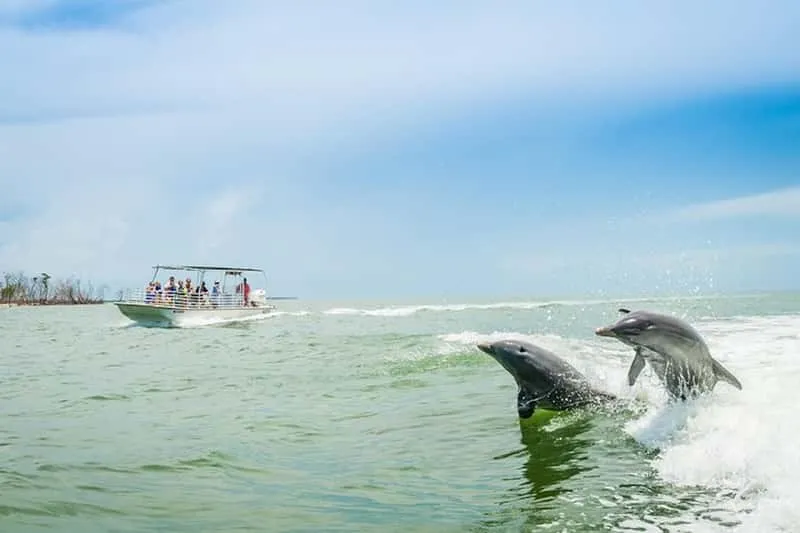
Perfect 5.0★ (62) Dolphin-Watching Boat Cruise from Goodland
Depart nearby Goodland and weave through the Ten Thousand Islands and Marco Island backwaters to find bottlenose dolphins playing in their natural habitat.
- Reliable wild bottlenose dolphin sightings
- Quiet departure from the fishing village of Goodland
- Backwater cruising through the Ten Thousand Islands
- Flawless 5.0-star traveler rating
 from $110
Most Reviewed · 4.8★ (215)
from $110
Most Reviewed · 4.8★ (215) 2-Hour Dolphin, Birding & Shelling Cruise
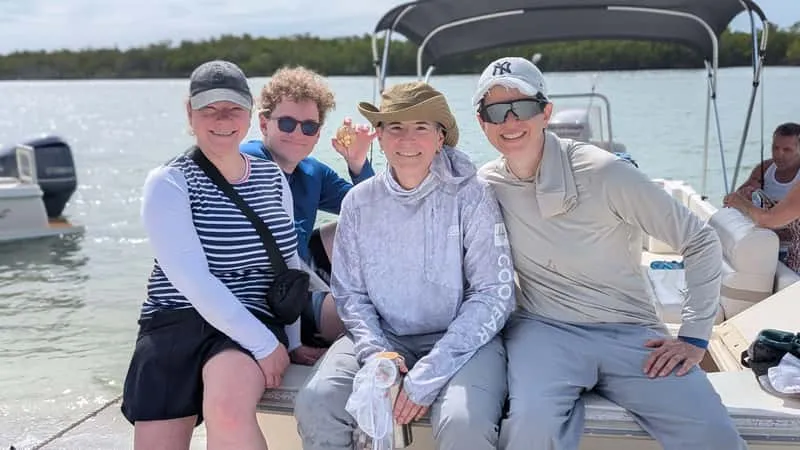
Cruise from Marco Island with a naturalist guide to spot dolphins playing by the boat, watch coastal birds, and collect shells and sand dollars — a favorite for…
- Most-reviewed Marco Island cruise: 200+ travelers
- Naturalist guide narrates dolphins and coastal birds
- Shelling and sand-dollar stop included
- Family favorite at a relaxed pace
 from $135
Top Rated · 4.9★ (97)
from $135
Top Rated · 4.9★ (97) Dolphin, Shelling & Beach Cruise: Ten Thousand Islands
Cruise Florida's Gulf coast from Marco Island, watch wild dolphins play alongside the boat, and stop at a secluded Ten Thousand Islands beach to hunt for shells and…
- Wild bottlenose dolphins alongside the boat
- Beach landing on a secluded Ten Thousand Islands key
- Shell and sand-dollar hunting on uninhabited sand
- 3 hours on the Gulf with a local captain
Why "Whale Watching" Turns Up Dolphin Trips Here
Booking platforms sort wildlife boat trips into a small set of shared categories, and "dolphin and whale watching" is one of the most common labels in that system worldwide, used whether or not whales are actually possible at a given departure point. A tour operator in Goodland selling a dolphin trip gets filed under the same category tag as an operator running deep-water trips off California or New England, because the platform's category list does not have a Florida-specific option. That is the honest mechanical reason the search term surfaces dolphin listings.
The water itself settles the question separately. Deep-water whale species do range through the Gulf of Mexico, and strandings of small whales have been reported off Southwest Florida from time to time, but those are open-water and offshore events, not something a two-hour trip through the Ten Thousand Islands back bays reaches. The shallow passes and mangrove channels around Marco Island and Goodland are dolphin and manatee water by depth and geography, not a scaled-down version of an offshore whale route.
| Trip | Duration | Price | What's included |
|---|---|---|---|
| Dolphin-Watching Boat Tour from Goodland | 2 hours | $118 per person | Guide, cooler with ice, Goodland Boating Park ticket included |
| 2-Hour Dolphin, Birding & Shelling Tour | 2 hours | $110 per person | Certified Florida Master Naturalist guide, customizable route |
| Dolphin, Shelling & Beach, Ten Thousand Islands | 3 to 4 hours | $135 per person | Captain and guide, bottled water, cooler with ice, shell buckets |
None of these three call themselves a whale watch, because none of them are. What they sell honestly is dolphin and back-bay wildlife water, which is the trip worth booking for this search.
What Actually Lives in This Water
The table below sorts what a trip through the back bays and passes around Marco Island actually turns up, ranked by how often each sighting genuinely happens rather than how exciting each animal is. None of these tiers are a guarantee; they describe a pattern, not a booking.
| Sight | How likely | Where | Notes |
|---|---|---|---|
| Wading birds and osprey (egrets, herons, pelicans) | Nearly every trip | Mangrove shorelines and channels throughout the Ten Thousand Islands | Present year-round in the refuge |
| Atlantic bottlenose dolphins | Often | Back bays, passes and channels near Goodland | Resident year-round; common but never certain on a given trip |
| Manatees | Sometimes | Sheltered backwater, most often in the cooler months | Protected; vessel speed restricted inside FWC zones |
| Roseate spoonbill, bald eagle | Rare | Ten Thousand Islands National Wildlife Refuge | Possible on a given day, not something to plan around |
| Whale species | Not on this water | Deep Gulf of Mexico, not the back bays | There is no whale-watching industry on Marco Island |
That ranking comes from what these operators' own trip descriptions and the refuge's known resident species support, not from a published sighting percentage, which none of the listings provide. Treat it as an honest pattern, not odds.
The Dolphins: Resident Bottlenose, Where and When
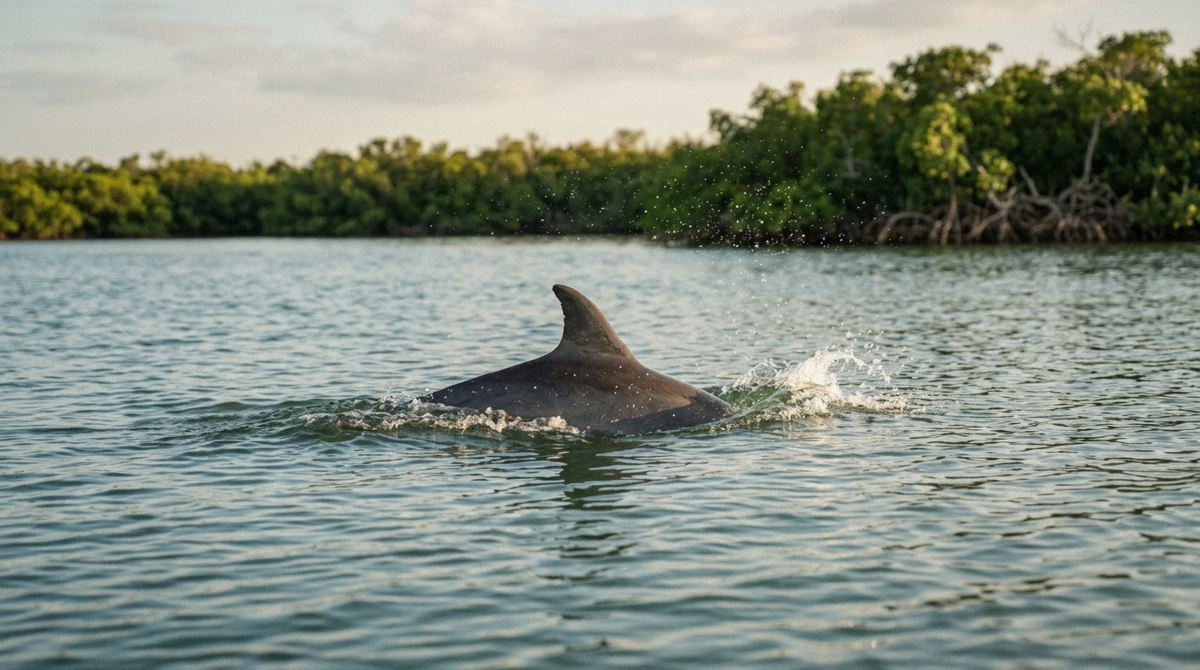
Atlantic bottlenose dolphins live in the back bays, passes and channels around Marco Island and Goodland year-round; they are not migratory visitors passing through on a schedule, which is why a dolphin trip runs on any month of the calendar rather than a defined season. They are protected under the Marine Mammal Protection Act, and captains on these trips read tide and channel activity to find where dolphins are actually working a pass, rather than following a fixed route.
One listing, the Goodland dolphin-watching trip, states its own policy plainly on the booking page: the operator says dolphin sightings are guaranteed and that guests get their money back otherwise. That is the operator's stated policy, not a claim we make ourselves. Sightings are wild animal behavior and are never certain on any single trip, regardless of what any refund policy promises.
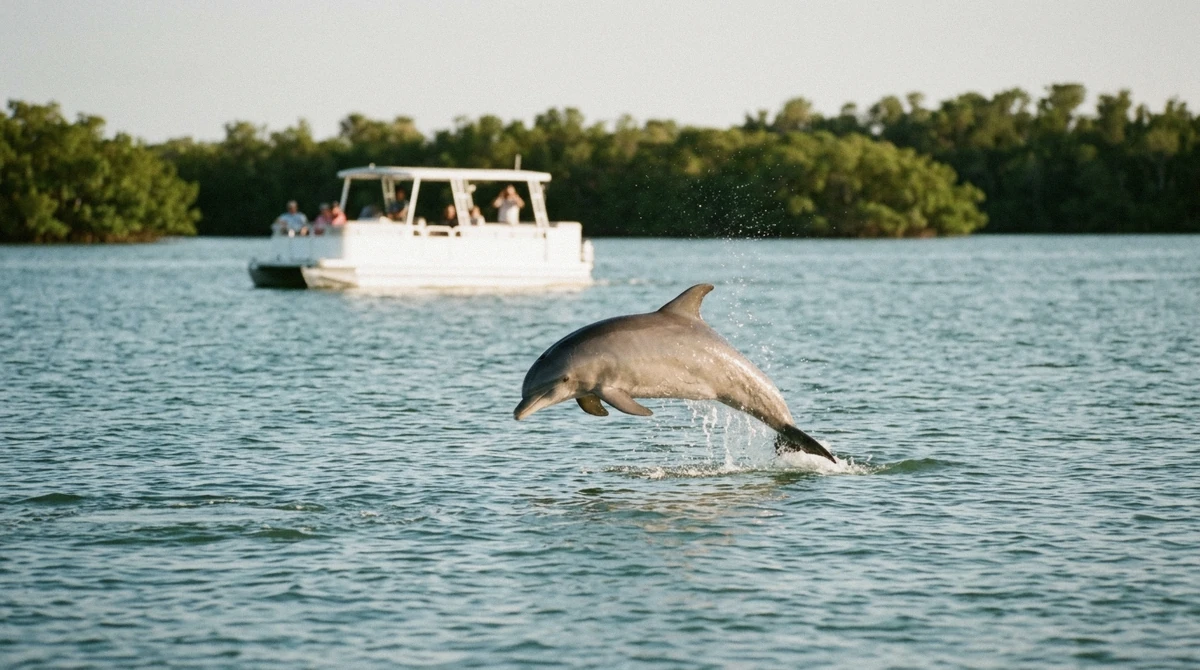
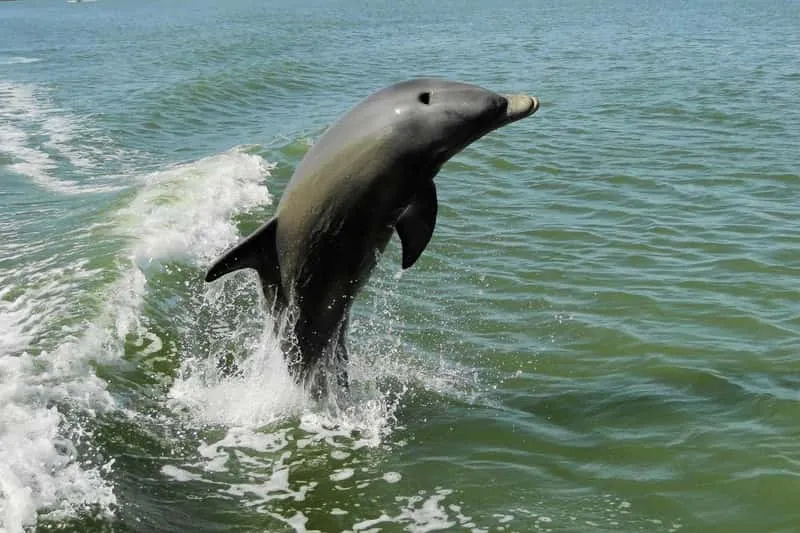
When dolphins do show, the behavior tends to fall into a few honest patterns rather than a single dramatic breach. Small groups, usually two to four animals, often work a pass or channel edge where bait fish stack up on a moving tide, surfacing and diving in a steady rhythm rather than lingering near a boat. Some individuals will ride a boat's bow wake for a stretch, which is genuinely one of the better views a guest gets, though it is the dolphin's choice entirely and not something a captain can prompt.
None of that pattern is a promise for a specific outing, only the shape of what a sighting tends to look like when it happens.
Manatees, and the Rules That Protect Them
Florida manatees are protected, and FWC manatee protection zones restrict vessel speed and, in some areas, entry outright. Boaters in these waters follow posted no-wake and slow-speed signage around known manatee habitat. Manatees turn up most often in sheltered backwater during the cooler months, when they seek warmer, calmer pockets of water, though we have not verified a specific local zone boundary and won't state one here.
FWC is the authority for any manatee rule specific to a stretch of water you're planning around.
Birds of the Ten Thousand Islands
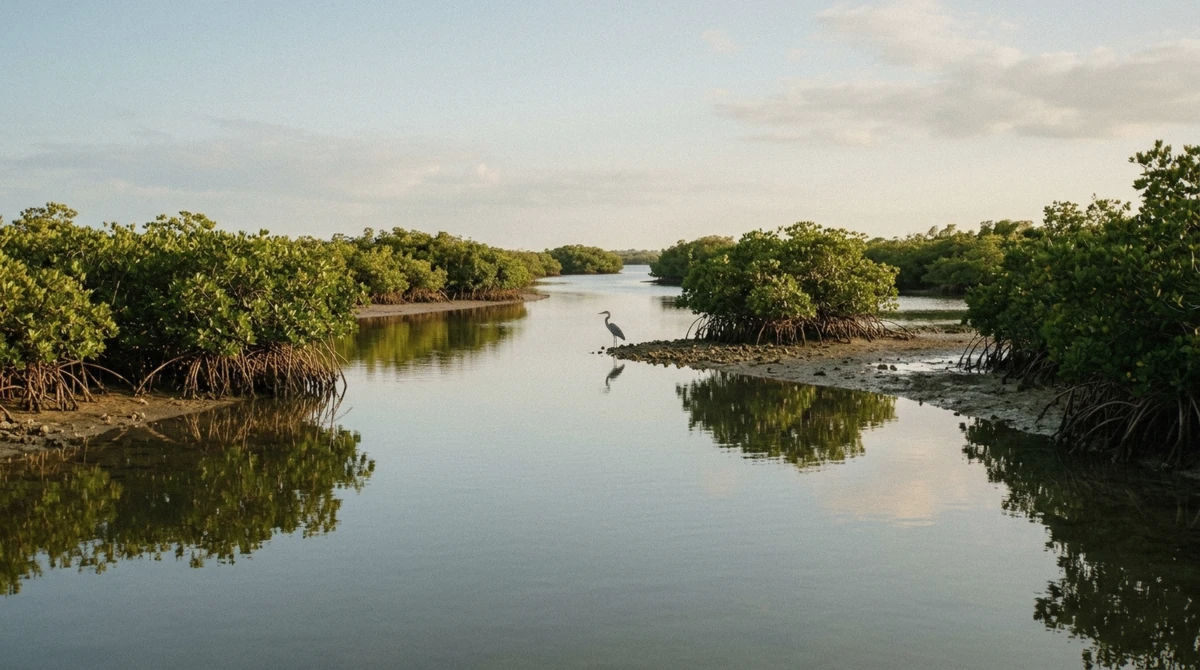
The Ten Thousand Islands National Wildlife Refuge, managed by the U.S. Fish & Wildlife Service, covers the water south of Marco Island, and a boat through it passes a working population of coastal birds most days.
- Osprey, fishing from snags and channel markers
- Brown pelican, both diving and gliding low over the water
- Great egret and snowy egret, working the shallows and mangrove edges
- Great blue heron and tricolored heron, stalking the tide line
- Roseate spoonbill, a genuine standout when one turns up
- White ibis, often in small foraging groups
- Bald eagle, less common but present in the refuge
Big Marco Pass Critical Wildlife Area, covering Sand Dollar Island and the Tigertail sandbar, was designated by FWC in 1988 specifically to protect nesting least terns, black skimmers, snowy plovers and Wilson's plovers. Posted nesting closures typically run from 1 March to 31 August, and boats and beachgoers are asked to stay outside the posted stakes and rope during that window.
The Law: How Close a Boat May Go
NOAA Fisheries advises staying at least 50 yards, or 150 feet, from wild dolphins, from a boat or from shore alike. That distance is guidance rather than every dolphin holding still for it, since the animals move and sometimes approach a boat on their own, but it sets the standard a responsible operator works to.
Feeding any wild marine mammal is illegal under the Marine Mammal Protection Act, and NOAA does not condone swimming with, touching, petting or trying to provoke a reaction from wild dolphins under any circumstance. Harassing, pursuing, capturing or harming a marine mammal is prohibited outright. The rule we operate by, and the one worth expecting from any operator you book, is simple: watch from the boat, let the animals set the distance, never feed them.
Which Trip Suits What You Want to See
If dolphins are the animal you actually want to see
the Goodland dolphin-watching trip is built around dolphin water specifically, at $118 for two hours.
If you want the most-reviewed guide plus a broader wildlife mix
the 216-review dolphin, birding and shelling trip pairs a certified naturalist guide with dolphins, birds and shells in one outing.
If you have a longer window and want the fullest wildlife and beach combination
the 3-to-4-hour dolphin, shelling and beach trip covers the most ground and the most time to actually spot something.
If birds specifically are your priority over dolphins
ask any of these guides to slow through the mangrove channels; osprey, pelicans and herons are a near-certain sighting there on any of the three trips.
Getting the Sighting: Tide, Time and Camera
None of this changes wild behavior into a guarantee, but it genuinely improves your odds and your view when something does surface.
- Ask your captain about the tide before you book a time slot; dolphins often work a moving tide through a pass more actively than slack water
- Take a seat with an open sightline rather than one boxed in by the console or a bimini top support
- Keep your camera or phone out and ready rather than stowed, since a dolphin surfacing gives you seconds, not minutes
- Stay quiet and still when the captain slows for a sighting; sudden movement and noise are more likely to send an animal back under
- Bring polarized sunglasses; they cut glare off the water surface and make a dorsal fin or a manatee's back easier to spot before it resurfaces
None of this costs anything to get right, and it makes the difference between a glimpse and ten minutes with a pod alongside. If you would rather build the day around a beach landing than a wildlife run, the boat-only sand south of Marco is covered in our guide to the best shelling beaches. To see which boats go where, compare the Marco Island dolphin cruises side by side.
Prices and inclusions on this page were checked against the operators' own listings. Last verified: August 2026.
None of this water owes you a whale, and honestly, none of it owes you a dolphin either, no matter what one operator's refund policy promises. What it reliably delivers is a working estuary: birds on nearly every trip, dolphins often enough that most guests do see them, and the occasional manatee or spoonbill that makes a trip memorable precisely because it wasn't guaranteed. If a genuine dolphin sighting on the water in Goodland is the trip you're after, our dolphin-watching tour guide covers that one booking in full, and the dolphin and shelling combination covers the pairing.
Frequently Asked Questions
Are there whales near Marco Island?
No. Marco Island has no whale-watching industry; the shallow back bays and passes here are dolphin and manatee water, not the deep Gulf water where whale species actually range.
What animals will I actually see on a Marco Island boat tour?
Wading birds and osprey on nearly every trip, Atlantic bottlenose dolphins often, and manatees or a roseate spoonbill on a good day. See the likelihood table above for the full pattern.
How close can a boat get to a wild dolphin?
NOAA Fisheries advises staying at least 50 yards, or 150 feet, from a wild dolphin, and feeding or attempting to touch one is illegal under the Marine Mammal Protection Act.
When are dolphins most active around Marco Island?
Bottlenose dolphins are resident year-round rather than seasonal, so there is no single month that governs sightings; captains on the Goodland dolphin trip read the tide and channel activity on the day rather than a calendar.
Where can you see manatees near Marco Island?
In sheltered backwater, most often during the cooler months, inside areas where FWC manatee protection zones restrict boat speed. No specific local boundary is confirmed here; FWC is the authority to check for a precise zone.
Is it legal to swim with or feed wild dolphins in Florida?
No. Feeding any wild marine mammal is illegal, and NOAA does not condone swimming with, touching or petting wild dolphins under any circumstance. The trips on the dolphin, birding and shelling tour and every other listing here watch from the boat only.