Best Time of Year for a Marco Island Boat Tour: Month-by-Month Guide
The best time of year for a Marco Island boat tour is November through April, when the rain drops under two and a half inches a month and the water off Goodland and the Ten Thousand Islands sits calm most mornings. That window is also the busiest one on the dock, so the honest trade is comfort against company. The rest of this guide walks the year month by month, sunset by sunset, so you can weigh that trade against whatever week you already have circled on the calendar.
Quick answer
November through April is the driest, most comfortable stretch for a Marco Island boat tour, with every one of those months averaging under two and a half inches of rain. It is also the most crowded window, since it overlaps with snowbird season, so a June or October booking trades a little more heat or rain for a shorter wait on the dock.
Key takeaways
- November through April is the driest window, though it is also the busiest one on the water
- Late June and early July hold the year's latest sunsets, close to 8:20 p.m.
- May is the swing month: hot afternoons but only about 3.4 inches of rain, mornings still settled
- September is the wettest month at 9.92 inches, worth weighing before you lock in the private sunset charter to a fixed date
- Every listed trip carries free cancellation up to 24 hours before departure, covered further on the boat tour price guide
- The dolphin, birding and shelling trip, the most reviewed one on the island, runs comfortably straight through the dry season
The Trips That Run Right Through the Year
These three keep running in every season, dry or wet, so the timing question below is about comfort and crowds, not about whether a boat is available.
 from $650
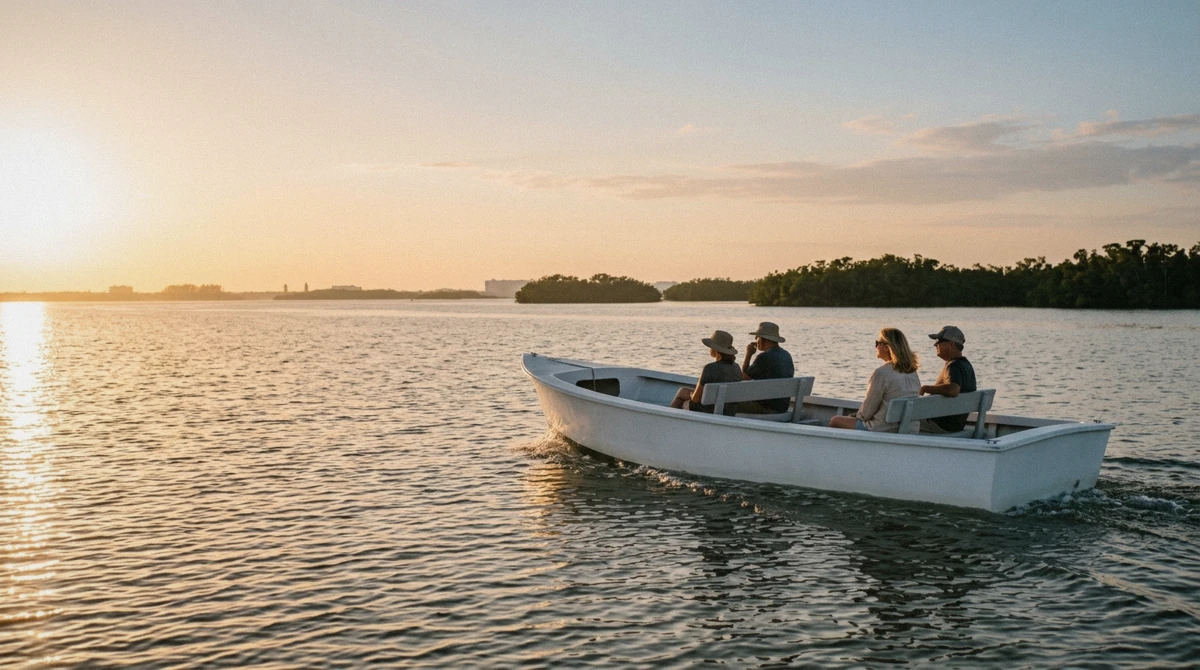
Private Sunset Charter
from $650
Private Sunset Charter Private Marco Island Sunset Cruise with Wildlife Viewing
Glide across the Gulf on a private Marco Island sunset cruise, watching dolphins play in the golden light as the sky turns over the water. Your own boat…
- Private boat for your group, up to six guests
- Golden-hour light over the Gulf of Mexico
- Dolphins and coastal wildlife along the way
- Two unhurried hours timed to sunset
 from $110
Most Reviewed · 4.8★ (215)
from $110
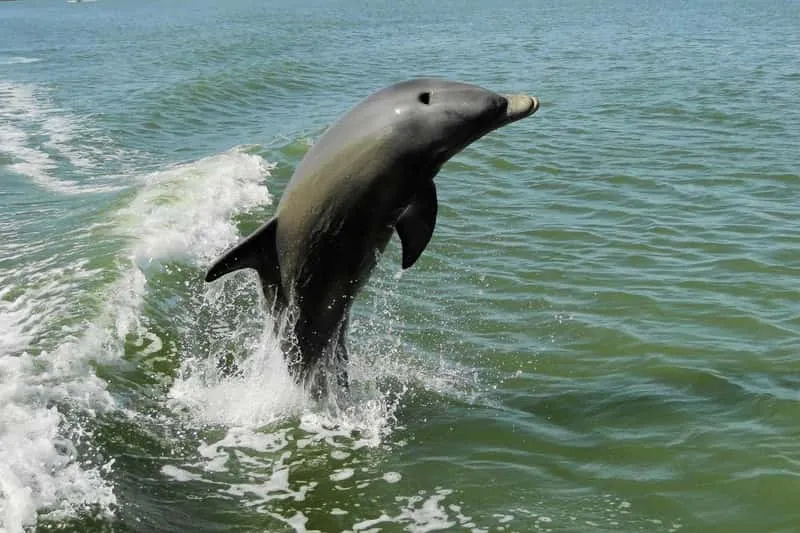
Most Reviewed · 4.8★ (215) 2-Hour Dolphin, Birding & Shelling Cruise
Cruise from Marco Island with a naturalist guide to spot dolphins playing by the boat, watch coastal birds, and collect shells and sand dollars — a favorite for…
- Most-reviewed Marco Island cruise: 200+ travelers
- Naturalist guide narrates dolphins and coastal birds
- Shelling and sand-dollar stop included
- Family favorite at a relaxed pace
 from $160
3.5 Hours · 4.8★
from $160
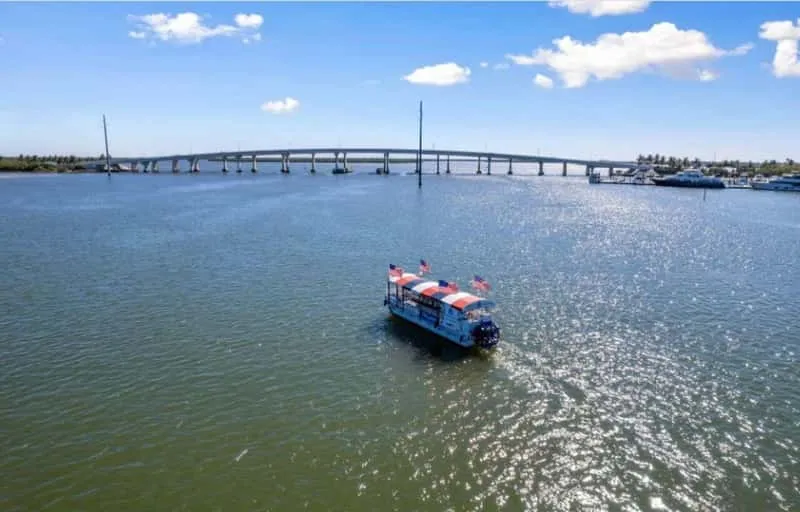
3.5 Hours · 4.8★ Ten Thousand Islands Shelling & Dolphin Cruise
Explore the Ten Thousand Islands National Wildlife Refuge by boat, watch dolphins in the wild, and spend time shelling for sand dollars on an uninhabited island beach.
- Longest trip: 3.5 hours in the wildlife refuge
- Dolphins in the Ten Thousand Islands National Wildlife Refuge
- Extended shelling stop on an uninhabited island
- Small-group, unhurried pace
Month by Month on the Water
We put the average high, the average rainfall, the mid-month sunset time and a plain read of what the water is actually like side by side, month by month, using NOAA National Centers for Environmental Information's 1991-2020 normals for the average high and rainfall figures and the U.S. Naval Observatory for sunset. What each ticket costs does not move with the season, and the current price ladder is broken down on the full boat tour price guide.
| Month | Average High | Rainfall | Sunset | On the Water |
|---|---|---|---|---|
| January | 73.9°F | 2.50 in | 5:57 p.m. | Cool mornings, calm chop, thin midweek crowds |
| February | 76.2°F | 1.91 in | 6:20 p.m. | Dry and breezy, snowbird season near its peak |
| March | 78.9°F | 2.05 in | 7:36 p.m. | Warming fast, clocks jump forward 8 March, still busy |
| April | 83.2°F | 2.48 in | 7:50 p.m. | Last dry-season month, comfortable water, easing crowds |
| May | 87.5°F | 3.38 in | 8:06 p.m. | The swing month, hot afternoons, settled mornings |
| June | 90.1°F | 8.36 in | 8:20 p.m. | Wet season and hurricane season both begin 1 June |
| July | 91.1°F | 6.60 in | 8:21 p.m. | Latest sunsets of the year, afternoon storms typical |
| August | 91.5°F | 9.16 in | 8:03 p.m. | Hottest month, humid, storm pattern holds through the day |
| September | 90.0°F | 9.92 in | 7:31 p.m. | Wettest month at 9.92 inches, hurricane season still active |
| October | 86.9°F | 3.21 in | 6:59 p.m. | Rain tapering off fast, air starting to cool |
| November | 80.5°F | 2.02 in | 5:38 p.m. | Dry season returns, hurricane season ends 30 November, clocks fall back 1 November |
| December | 76.8°F | 1.71 in | 5:38 p.m. | Driest month on the chart, cool and comfortable, busy holiday weeks |
Read that table as two seasons, not twelve independent months. August is the hottest at an average high of 91.5°F, January the coolest at 73.9°F, and September is the wettest at 9.92 inches against December's 1.71 inches, the driest reading on the chart. Everything else below fills in what those numbers actually feel like from the deck of a boat.
The Dry Season, November Through April, and What Snowbird Season Does to Availability
Every month from November through April averages under two and a half inches of rain, which is the real reason this is the season most people mean when they ask for the best time. Mornings run cool, afternoons stay dry more often than not, and the back bays around Goodland tend to lie flatter than they do in summer. The trade is that this is also snowbird season: Collier County's winter population swells with visitors escaping colder states, marinas fill earlier, and a Saturday morning slot in February can sell out days ahead where the same slot in September would not.
Book the trip you want as soon as you have dates, not the week you arrive, if you are traveling anywhere in this window.
December and January run coolest, with December landing as the driest month on the whole chart at 1.71 inches. Neither month is cold in any way that keeps a boat off the water, but a light layer for the ride back after sunset is worth packing regardless of the season, since it is the boat's own speed, not the air temperature, that makes the return trip cool.
The numbers behind that: every month from November through April averages under 2.5 inches of rain at the Marco Island station, per NOAA National Centers for Environmental Information 1991-2020 normals, while June through September each clear six inches. Prices do not swing with the season the way hotel rates do. Shared dolphin, shelling and sightseeing trips sit between $100 and $160 per person right through the year, and the private boats stay at $475 for up to six and $650 for the whole-boat sunset charter.
What changes in high season is availability, not the fare. Last verified: August 2026.
May, the Swing Month
May sits in an odd spot on the calendar. The average high climbs to 87.5°F, hot enough that afternoons feel like summer, but the rainfall total stays at 3.38 inches, closer to the dry months than to June's 8.36 inches. That combination tends to mean settled mornings and early evenings even as the thermometer says otherwise, and it is one of the few months where the crowds of the dry season have thinned out but the wet season's storm pattern has not fully arrived.
If your dates are flexible and you want lighter dock traffic without betting on a genuinely wet month, May is worth a look before the wet season sets in properly in June.
Summer: Heat, Afternoon Storms and Why Evening Departures Still Sail
June through September is the wet half of the year on this stretch of coast, with every one of those months averaging over six inches of rain and September topping the list at 9.92 inches. The pattern is a predictable one: sea-breeze thunderstorms build inland through the afternoon as the day heats up, which is why a lot of local guides, us included, favor evening departures in summer. By the time a sunset trip is loading, the afternoon buildup has often cleared through, and boats set out into calmer, cooler air than the middle of the day offered.
That is a pattern, not a promise: some afternoons the storms sit longer than others, and we never claim a given evening will be clear.
August is the hottest month on the chart at an average high of 91.5°F, with humidity that makes it feel hotter still on the dock. The upside of summer is a longer window of good light: the dolphin, birding and shelling trip runs comfortably in these months, and the water itself, warmed all season, is at its most pleasant for anyone who ends up wading a sandbar for shells.
Hurricane Season, Plainly, and What Free Cancellation Actually Covers
The Atlantic hurricane season, as defined by the NOAA National Hurricane Center, runs from 1 June to 30 November every year, and it covers the same stretch as the wet season above. That does not mean any given week in that window sees a storm; most of it passes with nothing worse than the afternoon thunderstorm pattern already described. What it does mean is that a trip booked months ahead for August or September carries a real, if usually small, chance of a weather cancellation, and it is worth knowing what the listings actually promise before that happens rather than after.
Every trip on this site carries free cancellation up to 24 hours before departure. That covers a change of plans on your end with no penalty, and it is also the mechanism that protects you if the operator cancels for weather: you are not locked into a non-refundable ticket for a boat that will not run. It does not mean a forecast alone gets you a refund on shorter notice, and it is not a substitute for checking the actual cancellation terms on the listing you book.
Last verified: August 2026.
What Time Is Sunset, and When to Be on the Water
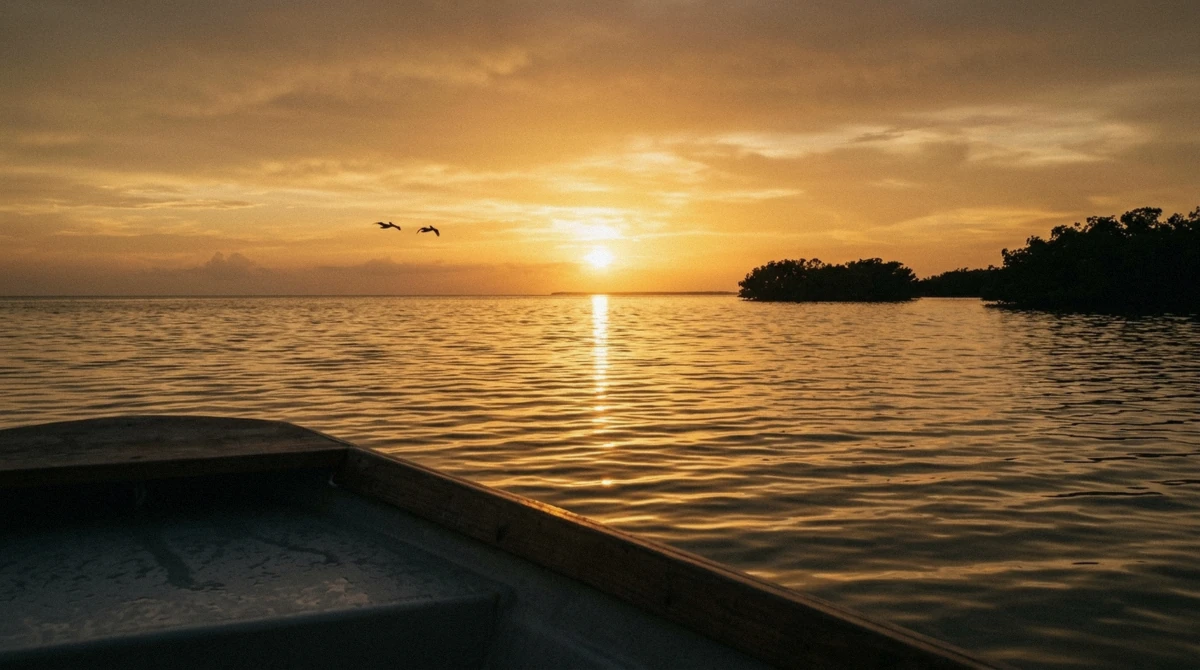
Sunset swings by close to three hours across the year on Marco Island, from 5:38 p.m. in November and December to 8:20 p.m. in mid-June, all times from the U.S. Naval Observatory for this stretch of coast. The light most people actually book a cruise for sits in the last 45 minutes before sunset and the 20 minutes after it, so an evening trip wants to be on the water and clear of the dock well before the clock hits the number in the table below, not right at it.
| Month | Sunset | Civil Twilight Ends |
|---|---|---|
| January | 5:57 p.m. | 6:22 p.m. |
| February | 6:20 p.m. | 6:44 p.m. |
| March | 7:36 p.m. | 7:59 p.m. |
| April | 7:50 p.m. | 8:14 p.m. |
| May | 8:06 p.m. | 8:31 p.m. |
| June | 8:20 p.m. | 8:46 p.m. |
| July | 8:21 p.m. | 8:46 p.m. |
| August | 8:03 p.m. | 8:27 p.m. |
| September | 7:31 p.m. | 7:54 p.m. |
| October | 6:59 p.m. | 7:22 p.m. |
| November | 5:38 p.m. | 6:02 p.m. |
| December | 5:38 p.m. | 6:03 p.m. |
Two dates matter more than the rest of the table for anyone booking close to them. Daylight saving time begins Sunday 8 March 2026, which moves sunset from roughly 6:30 p.m. the day before to roughly 7:30 p.m. the day after, and it ends Sunday 1 November 2026, which moves it back the same distance overnight. A trip booked for the week of either changeover should double-check the departure time against the current sunset rather than a date you saw earlier in your planning, since the clock itself will have shifted under you.
A quick pre-trip check, whatever the month
- Look up sunset for your date, then book a departure that puts you on the water for the last hour of light
- Check the forecast the evening before, not the week before, and remember the free cancellation window closes 24 hours out
- Between June and November, watch the National Hurricane Center rather than a weather app headline
- Pack a light windbreaker even in August: the ride home after dark is cooler than the air suggests
- In March and November, check whether the clocks have already changed before you set an alarm
Wildlife Through the Year: Dolphins, Manatees and Nesting Shorebirds
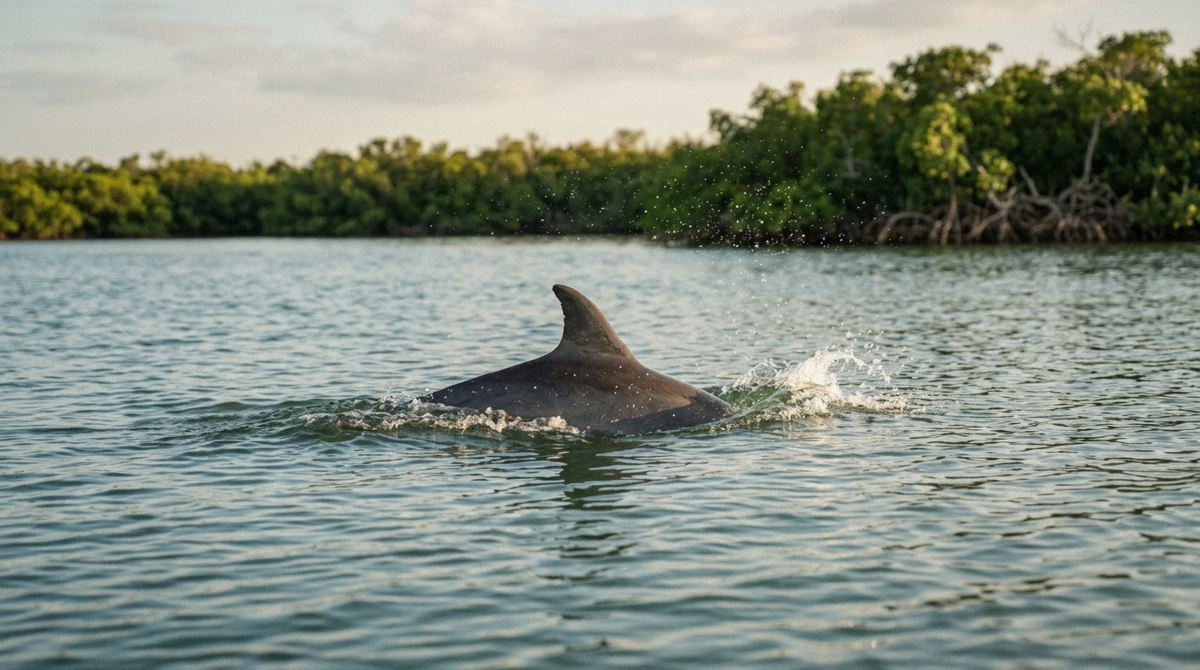
Atlantic bottlenose dolphins live in the back bays and passes around Marco Island and Goodland year-round, so there is no real dolphin season here in the way there is a weather season; sightings depend on the day, not the month. NOAA Fisheries asks boaters to stay at least 50 yards from wild dolphins and never to feed them, and every trip we run follows that. If your search actually led you here looking for whales rather than dolphins, it is worth reading the honest picture on whale watching around Marco Island before you book anything on the strength of that word.
Florida manatees, also protected, tend to show up more often in sheltered backwater during the cooler months, when they favor calmer, warmer pockets of water over the open bay. Nesting shorebirds are the one genuinely seasonal wildlife note: the Big Marco Pass Critical Wildlife Area and stretches of Keewaydin Island under Rookery Bay's rules post closures for nesting least terns, black skimmers, snowy plovers and Wilson's plovers that typically run 1 March to 31 August. Boats stay outside the posted stakes on any trip that passes those beaches during that window, no matter the month you book.
Shelling Through the Year: Why Cold Fronts Matter More Than Months
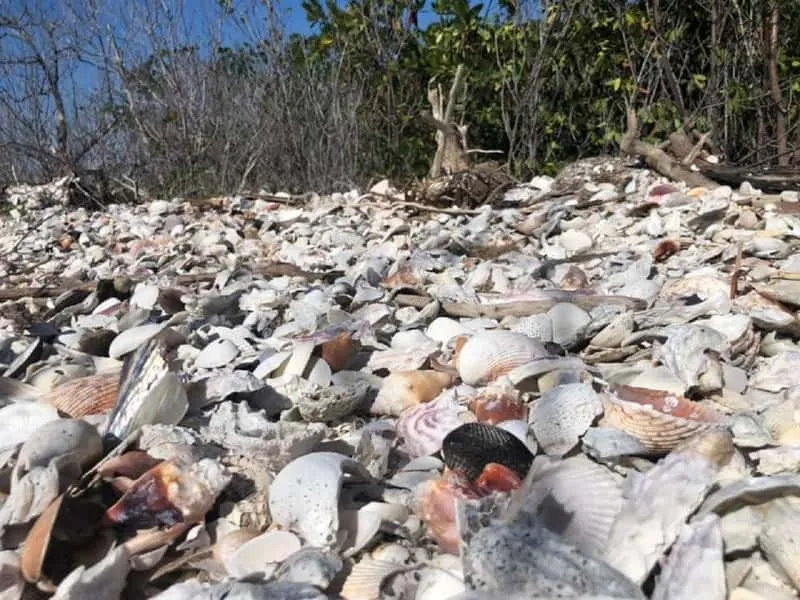
Shelling does not really follow a calendar the way weather does. The two things that actually turn up shells are a falling or low tide and the day or two after a winter cold front pushes water and shell beds onto the sand at spots like Kice Island, Dickman's Point and Keewaydin Island. A well-timed February morning after a front can outshell a random August afternoon by a wide margin, and the reverse is just as true.
Check the tide chart for your travel dates before you check the season.
The rules stay the same in every month: under Florida Fish and Wildlife Conservation Commission guidance, a shell that still has the animal living inside it counts as a harvest and needs a saltwater fishing licence to take, and inside the wildlife refuge and reserve beaches nothing living may be removed at all. Guides on these trips ask you to put live sand dollars, sea stars and conchs back where you found them, which is the simplest rule to carry with you regardless of when you visit.
Pick Your Month by What You Want
If you want the coolest, driest, most comfortable water conditions
come November through April, the dry season, though it is also the busiest stretch and boats fill up first.
If you want the latest sunset light for photos
book for late June or early July, when sunset holds near 8:20 p.m. and the evening light runs long.
If you want thinner crowds and don't mind some heat
May or October both work, sitting on either side of the wettest months with dock traffic lighter than peak season.
If budget matters and you can hold flexible dates
the shoulder months of May and October pair reasonable conditions with free cancellation up to 24 hours out if plans shift.
If privacy matters more than the calendar
the private sunset charter runs on your schedule in any season, dry or wet.
So, when should you go. If comfort and dry ground under your feet at the dock matter most, November through April earns its reputation, crowds and all. If you would rather have the water closer to yourself and can take a chance on an afternoon shower that usually clears by evening, May through October opens up without actually closing anything down.
Neither answer is wrong, and neither one is a bet on weather we can promise you; it is a trade between comfort, company and light, and the table above is there so you can make that trade with real numbers instead of a guess. For the current lineup across every season, see Marco Island evening cruises.
Frequently Asked Questions
What is the best month for a boat tour on Marco Island?
November through April, when rainfall stays under two and a half inches a month and mornings tend to be calm, though this is also the most crowded stretch on the dock.
What time does the sun set on Marco Island?
Anywhere from 5:38 p.m. in November and December to 8:20 p.m. in mid-June, based on the U.S. Naval Observatory. Check the month-by-month table above for the exact reading closest to your dates.
Is it worth going out on the water in summer?
Yes, particularly on an evening trip like the dolphin, birding and shelling tour: afternoon storms typically build inland and clear through by early evening, though that is a pattern, not a guarantee for any single date.
What happens to a booking if a storm cancels the trip?
Every listed trip carries free cancellation up to 24 hours before departure, which is what protects a booking if an operator cancels for weather. It is not a same-day guarantee against a forecast alone, so check the terms on the specific listing.
When is snowbird season on Marco Island?
It overlaps with the dry season, roughly November through April, and it is the reason that window books up faster than the rest of the year even though the weather itself is the most forgiving.
What is the calmest water of the year?
Winter mornings, December through February, tend to run the flattest, helped by cooler air and the season's lowest rainfall. May mornings run a close second before the afternoon heat builds.
Does hurricane season mean the boats stop running?
No. The Atlantic hurricane season runs 1 June to 30 November by NOAA National Hurricane Center dates, and most days in that window pass with no storm at all. The private sunset charter and the rest of the fleet keep running through it, backed by the same 24-hour free cancellation as any other month.